Examples of educational animations
I have identified three main types of educational animations and have included examples:
Explanatory animations
The following 6 animations were orginally created as part of my Animating Best Practice Masters thesis from 2007. They all relate to reading music with a focus on what you need to know as a drummer. By removing the pitch and harmony elements of music I was able to make this task more manageable.
Beat and tempo
Drum notation
Rhythmic notation
Counting
Time signatures
Navigating chord charts
The following Treble Clef animation was not part of the original 6 animations for drummers. This animation and the Key Signature animation were commissioned by the Knowledge Bank initiative of the Department of Education and Early Childhood Development (DEECD) in 2006.
The Treble Clef
I created the Apostrophes animation in 2009 to show my colleagues how my plans for student-authored explanatory animations would not be confined to musical topics. I also needed to have an example of a director's commentary. In this case I actually made two commentaries. The first is called an Educator's commentary as I discuss issues related to pedagogy and the topic itself whereas the Animator's commentary discussed the process and technical matters. The children's Director's commentaries for the Storyboard project will be more like the educator's commentary as the focus will be on their topic and their rationale for the order and content of their animation.
Apostrophes
Apostrophes (Educator's commentary)
Apostrophes (Animator's commentary)
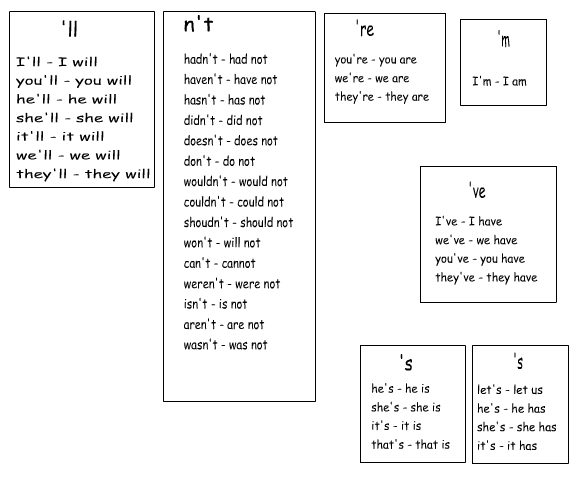
It is worth noting that I do not suggest that animations are always a complete solution for explaining a concept. It is still beneficial for children to see common words so the following classroom poster would still be invaluable for children have around so they become familiar with how these words actually look. The idea of retaining useful information became the rationale for the 'reference frames' at the end of some of the children's animations.
http://rbeaudoin333.homestead.com/files/contractions/contractions_list_of_words_1.html (accessed 021109)
I also found it interesting that my own understanding of the topic was enhanced through the process of creating an explanatory animation. As a literate adult I thought there was little for me to learn about this topic but I noticed two facts that I picked up during this process:
Learning environments
The Key Signature animation is an example of a learning environment as it is fully interactive.
Key Signatures
Jenny Eather has also developed several animations of the learning environment variety dealing specifically with mathematics. They can be found at www.amathsdictionaryforkids.com
Animated GIFs
The following two images were originally made to explain how you can fit more into a school day if student's are given the opportunity to work on rich learning activities.


I made these same two images into an animated GIF so I would have an example of my own to list here. Animated GIFs are most commonly used in web advertising. The limitations for educational purposes are the absence of a voice over which is a key element in the Storyboard methodology.
